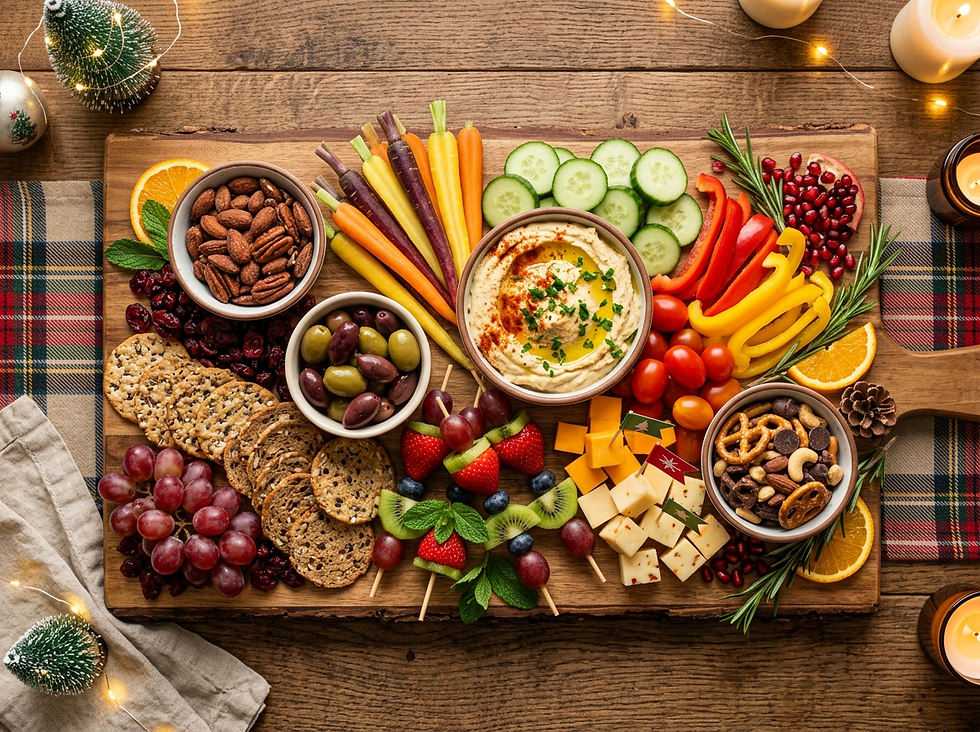
Healthy Holiday Party Eating Tips to Enjoy Festivities and Stay on Track

The Holiday season is right around the corner. And for a lot of us, that means Holiday parties, events, and gatherings with plenty of food and drink options that may not fit our healthy eating plan. One minute you are catching up with friends, and the next you are standing beside a buffet table wondering how many “just one more” bites you have had.
The good news is that healthy eating during the holidays does not require skipping the foods you love or arriving with a list of strict rules. A steadier approach works better. Plan a little, choose mindfully, enjoy what feels special, and build enough balance into the evening that one party does not throw off your goals.
The tips below are practical, flexible, and realistic for potlucks, office parties, family gatherings, cookie swaps, neighborhood events, and New Year’s celebrations.
(This post is for general information only and is not a substitute for medical or nutrition advice tailored to your needs.)

Plan before the party so choices feel easier
Healthy holiday eating often starts before the first appetizer appears. A small amount of planning can keep you from arriving overly hungry, distracted, or ready to eat whatever is closest.
Start by thinking about the event. Is it a full dinner, a cocktail-style party, or a dessert-heavy gathering? If you know dinner will be served, eat a normal breakfast and lunch rather than “saving up” all day. Skipping meals can backfire because extreme hunger makes it harder to notice fullness cues and choose portions that feel good.
If the event is more of a snack-and-sweets situation, have a simple meal beforehand. A bowl of soup with whole-grain toast, eggs with vegetables, or a turkey and avocado sandwich can help you arrive satisfied. The goal is not to avoid party food. The goal is to avoid walking in so hungry that every choice feels urgent.
It also helps to set a loose intention. Keep it gentle and specific.
For example:
“I will start with water and a plate of real food.”
“I will choose the dessert I truly want instead of sampling every sweet.”
“I will eat slowly enough to enjoy the meal.”
“I will include vegetables or fruit on my plate when they are available.”
A flexible plan is easier to follow than a harsh one. If your intention is too strict, one unplanned cookie can make the whole night feel like a failure. If your intention is balanced, you can adapt without guilt.
Before you go, check in with what matters most at the event. Maybe your aunt makes a once-a-year pie you look forward to. Maybe the cheese board is always impressive. Maybe you care more about the meal than the appetizers. Pick the foods that feel worth it, then let the less exciting extras be optional.
That mindset turns choices into decisions, not reactions.
Navigate the buffet table with confidence
Buffets can be challenging because everything is visible at once. Plates are often large, portions are self-serve, and people tend to graze while talking. A simple strategy can make the buffet feel less overwhelming.
Start with a quick lap before filling your plate. Look at what is available and decide what you actually want. This pause helps prevent piling on foods simply because they were first in line.
Then use the plate as a guide.
A balanced party plate might include:
Half the plate Vegetables, salad, fruit, or lighter options when available
One quarter of the plate Protein such as turkey, chicken, shrimp, beans, eggs, lentils, or cheese
One quarter of the plate Starches or richer foods such as stuffing, mashed potatoes, pasta salad, rolls, or casseroles
This does not need to be exact. It is just a visual cue that helps create balance without tracking every bite.
Portion control also gets easier when you choose smaller amounts of more flavorful foods. Rich holiday dishes are often satisfying in modest portions because they contain butter, cream, cheese, sugar, or salt. A few bites of a favorite casserole may feel more enjoyable than a large serving eaten quickly.
Try these buffet habits:
Use a small plate if one is available.
Sit down to eat when possible.
Keep napkins, toothpicks, and empty cups out of your hands so you notice when you are still grazing.
Move away from the buffet after filling your plate.
Wait a few minutes before going back for seconds.
The pause before seconds matters. Fullness is not always immediate. Give your body a little time to register what you have eaten. If you still want more, choose it intentionally.

Balance indulgence with foods that help you feel good
Start by choosing the indulgences that truly matter to you. A favorite homemade dessert, a special family recipe, or a seasonal dish you rarely get may be worth enjoying fully. Foods you can have any time, such as packaged cookies or ordinary chips, may be easier to skip.
When you choose a treat, slow down. Put it on a plate, sit or stand away from the serving area, and pay attention to the flavor. The first few bites are usually the most satisfying. Eating slowly helps you notice whether you want more or whether you have had enough.
Pair richer foods with nutritious ones when you can. If you want macaroni and cheese, add salad or roasted vegetables. If you choose dessert, make sure your earlier plate included protein. If you have appetizers, include something fresh or high in fiber.
This kind of balance can look like:
A slice of pie with hot tea
Cheese and crackers with fruit
Mashed potatoes with turkey and green beans
A cookie after a balanced meal
A rich dessert enjoyed slowly, with a drink that is not sugary
A satisfying snack that includes sweetness, crunch, and protein
Comfort food balanced with protein and vegetables
A treat that feels enjoyable without replacing dinner
Mindful indulgence also means letting go of guilt. Guilt does not improve nutrition. It often leads to an all-or-nothing cycle, where one rich meal turns into several days of feeling off track. A better response is simple: enjoy the party, then return to your usual habits at the next meal.
If you overeat, avoid punishing yourself with skipped meals or excessive exercise. Drink water, take a walk if it feels good, and eat balanced meals the next day. Your long-term patterns matter more than one evening.

Healthy holiday party eating tips are most useful when they make the season feel easier, not stricter. You do not need a perfect plan. You need a flexible one that helps you feel energized, comfortable, and present.
The next time you walk into a holiday gathering, take a breath before filling your plate. Look for what you truly want. Add something nourishing. Drink some water. Enjoy the foods that make the season special.
That is how you stay on track while still taking part in the celebration.
Now, go enjoy!
XO,
Stacy
H3 Fitness
Healthy. Happy. Habits.